 Quanzhou Ausenist Technology Co., Ltd
 VFD for Water Pump in High Altitude Applications
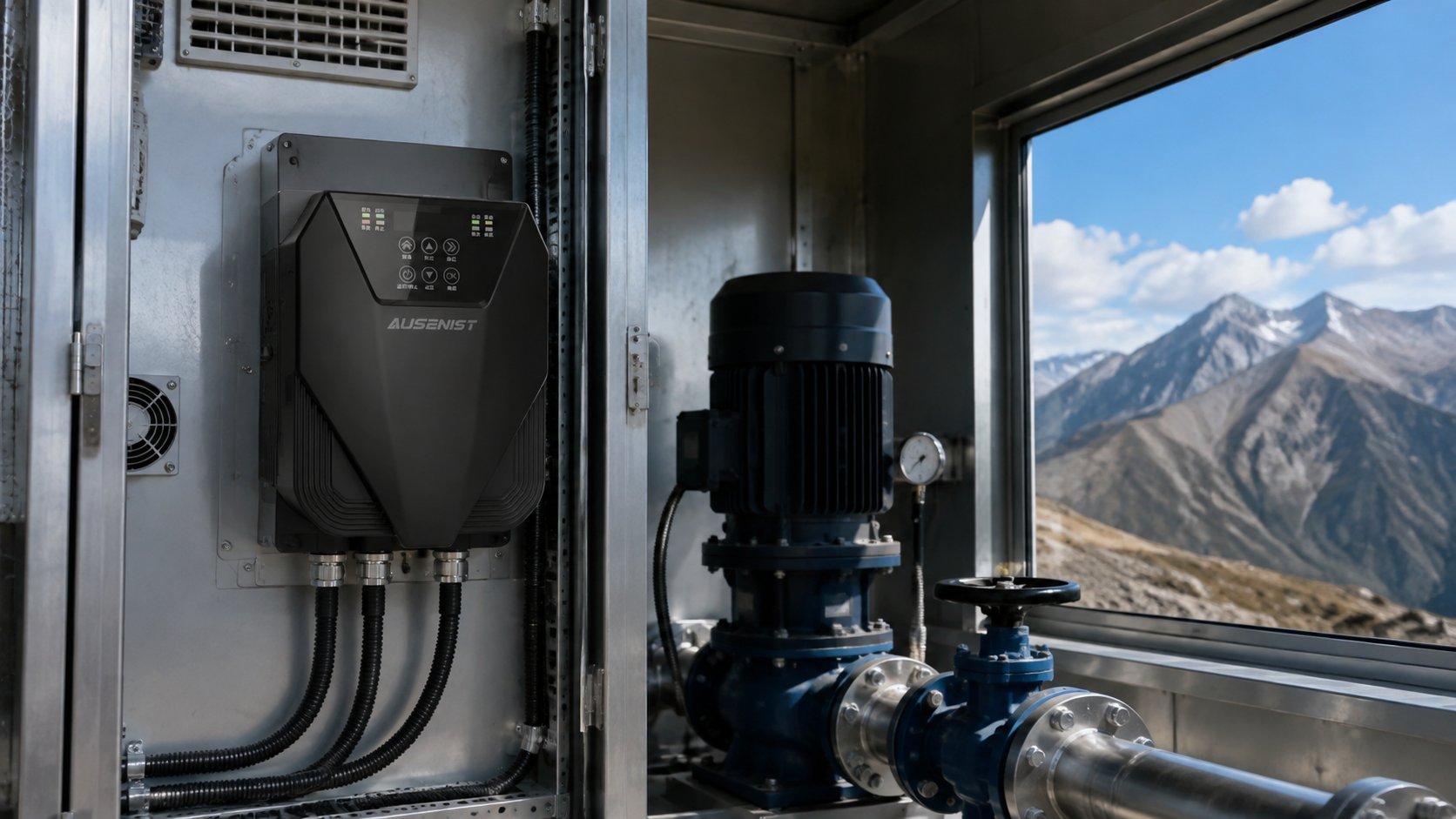
A water pump VFD at high altitude may need output-current derating or a larger drive because thinner air reduces cooling and electrical clearances become more demanding. Do not apply a universal derating percentage from another brand or model. Check the exact manufacturer's altitude limit and derating curve, then consider ambient temperature, enclosure ventilation, motor loading, supply voltage and the pump operating point together.
What Information Is Required?
- Exact site altitude above sea level and maximum ambient temperature.
- Motor nameplate voltage, rated current, power, frequency, speed and motor type.
- Input voltage, phase, frequency, voltage variation and generator use if applicable.
- Pump application, required flow and head, pump curve and expected duty cycle.
- Quantity of pumps and whether they share a cabinet or operate as duty and standby units.
- Enclosure type, cabinet dimensions, cooling method, dust, humidity and solar exposure.
- Motor-cable length, grounding, switching devices and any output filter requirement.
- Control method, sensor signal, communication and protection requirements.
Altitude and temperature must not be evaluated independently. A shaded indoor panel at high elevation can have a different thermal risk from a sealed outdoor cabinet exposed to direct sun.
Selection Example
A 7.5 kW, 380 V pump motor has a rated current of 16 A and will operate at a 2,800 m site. The installer should not automatically choose a nominal 7.5 kW drive. First check the proposed model's documented altitude threshold and current derating at 2,800 m. Then check the simultaneous ambient-temperature derating and enclosure conditions.
If the available continuous output current after all applicable derating is below 16 A, select a larger rating or improve the installation within the manufacturer's rules. Finally, verify the pump curve and measured motor current at the required flow and head. Oversizing the VFD does not correct an overloaded pump, low supply voltage or blocked ventilation.
Common Mistakes
- Ignoring altitude because the motor kW matches the VFD label.
- Applying a generic “one percent per 100 m” rule without checking the exact manual.
- Placing the drive in a sealed or sun-heated cabinet with no thermal calculation.
- Forgetting that a larger drive may require different protection, cable or cabinet space.
- Assuming reduced air density affects only the VFD and not the motor or other equipment.
AUSENIST Solution
AUSENIST can review altitude, ambient temperature, enclosure, motor current, pump duty and supply conditions before selecting a YS620 or YS820 option. The recommendation can identify required derating, rating margin, installation needs, basic pump parameters and items that must be validated at commissioning.
AUSENIST should not provide a final model from altitude alone. The project may be unsuitable when site conditions exceed confirmed product limits, cooling cannot be maintained, required clearances or approvals are not available, or the motor and pump operate outside their safe envelope. Use the exact model manual and qualified local engineering for the final installation.
Send us your motor nameplate. We can recommend the VFD model and basic parameter configuration.